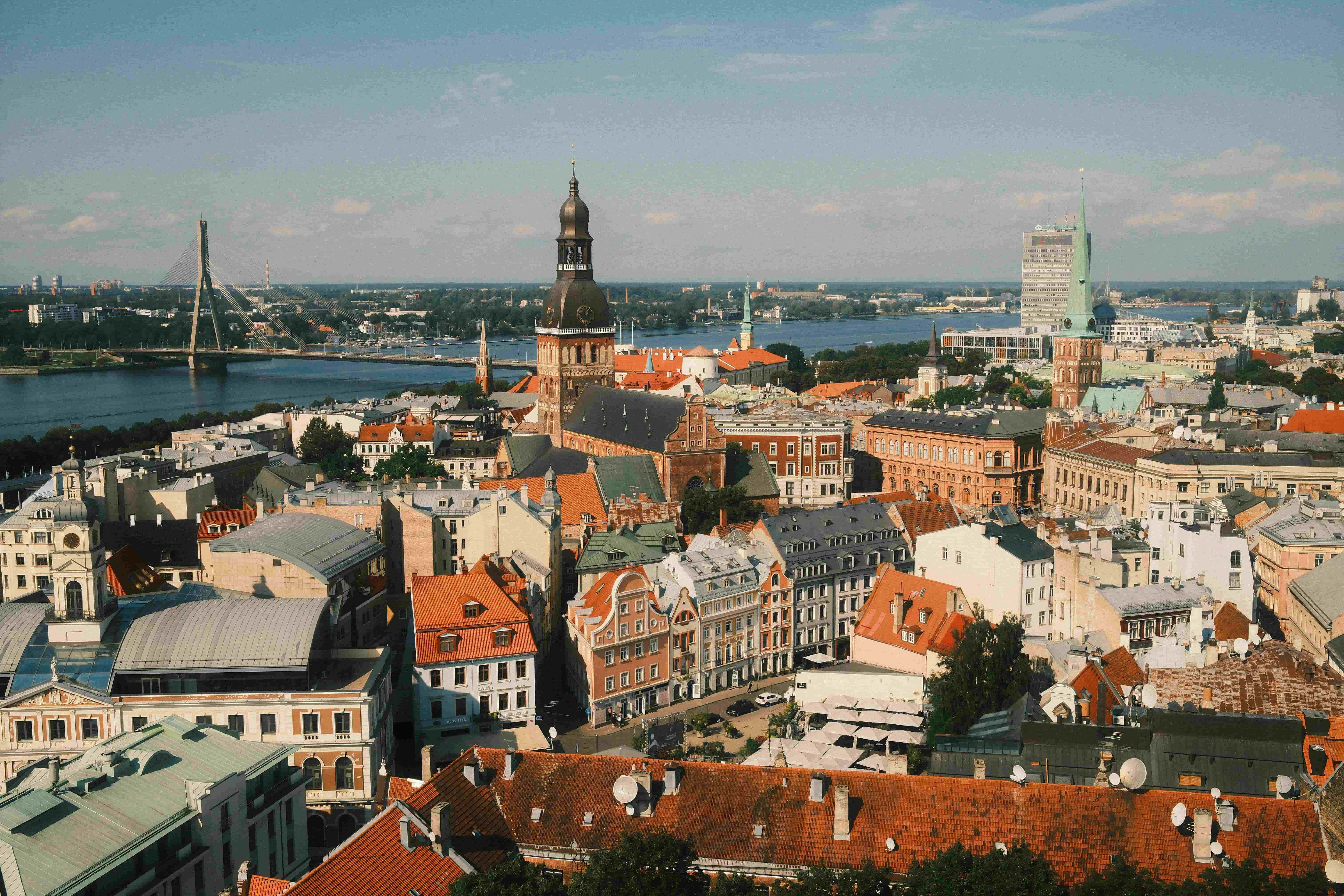
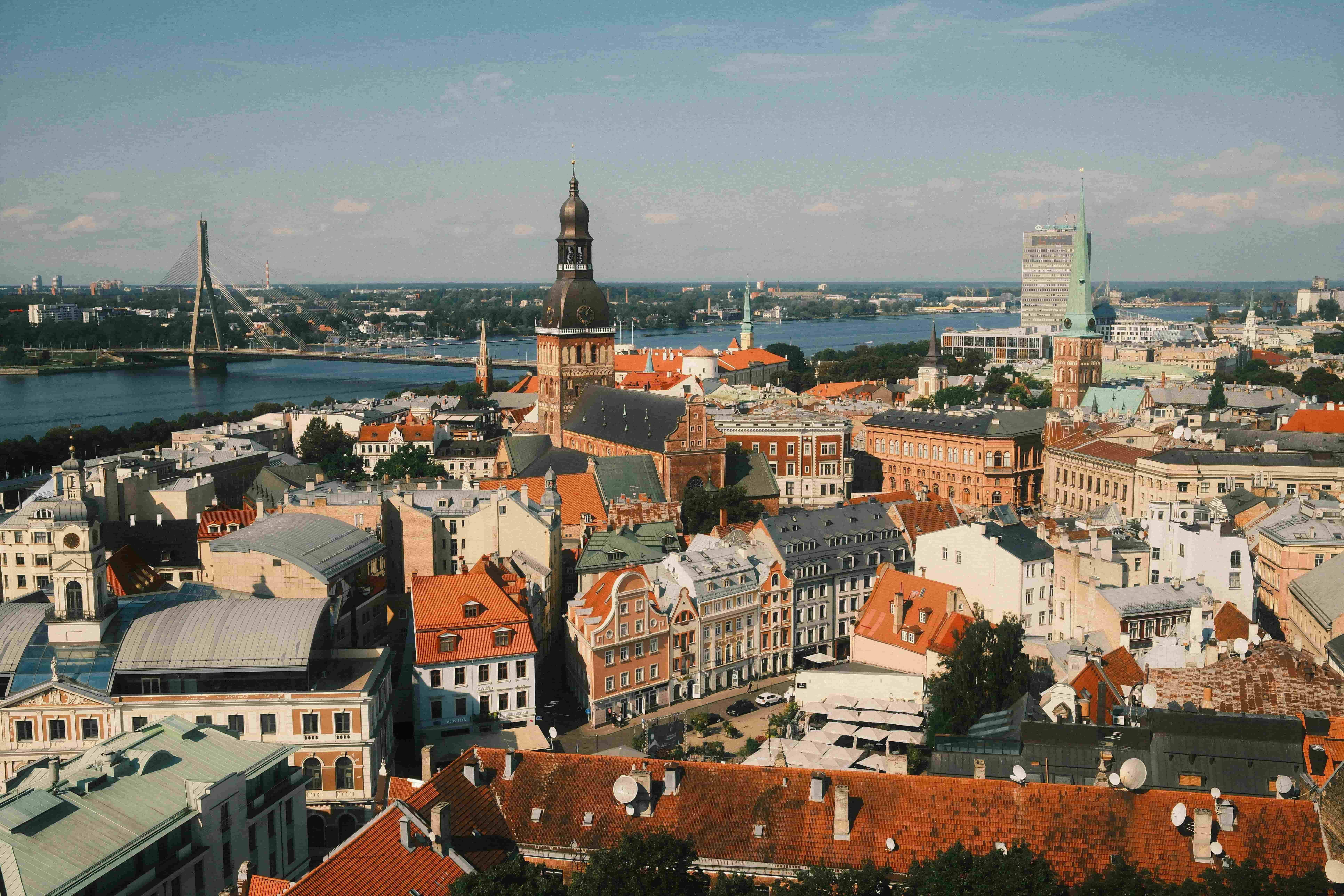
Upon arriving in any country, every tourist begins actively searching for must-see attractions and must-see spots.
There are a million collections of photos and addresses of Riga's landmarks online, but that's where the information ends.
What's the point of seeing a landmark without even knowing its value?
That's why StoryWalk created this article!
With our selection, you'll not only answer the eternal question "What should I see in Riga?" but also discover the true meaning of the city's landmarks, something ordinary tourists almost never do.
In this article, we've compiled all of Riga's most famous landmarks.
We've revealed their stories and dispelled the myths associated with them, so you can experience Riga as it truly is – unlike other visitors.
The House of the Blackheads and Town Hall Square
Address: Rātslaukums 7, Centra rajons, Rīga
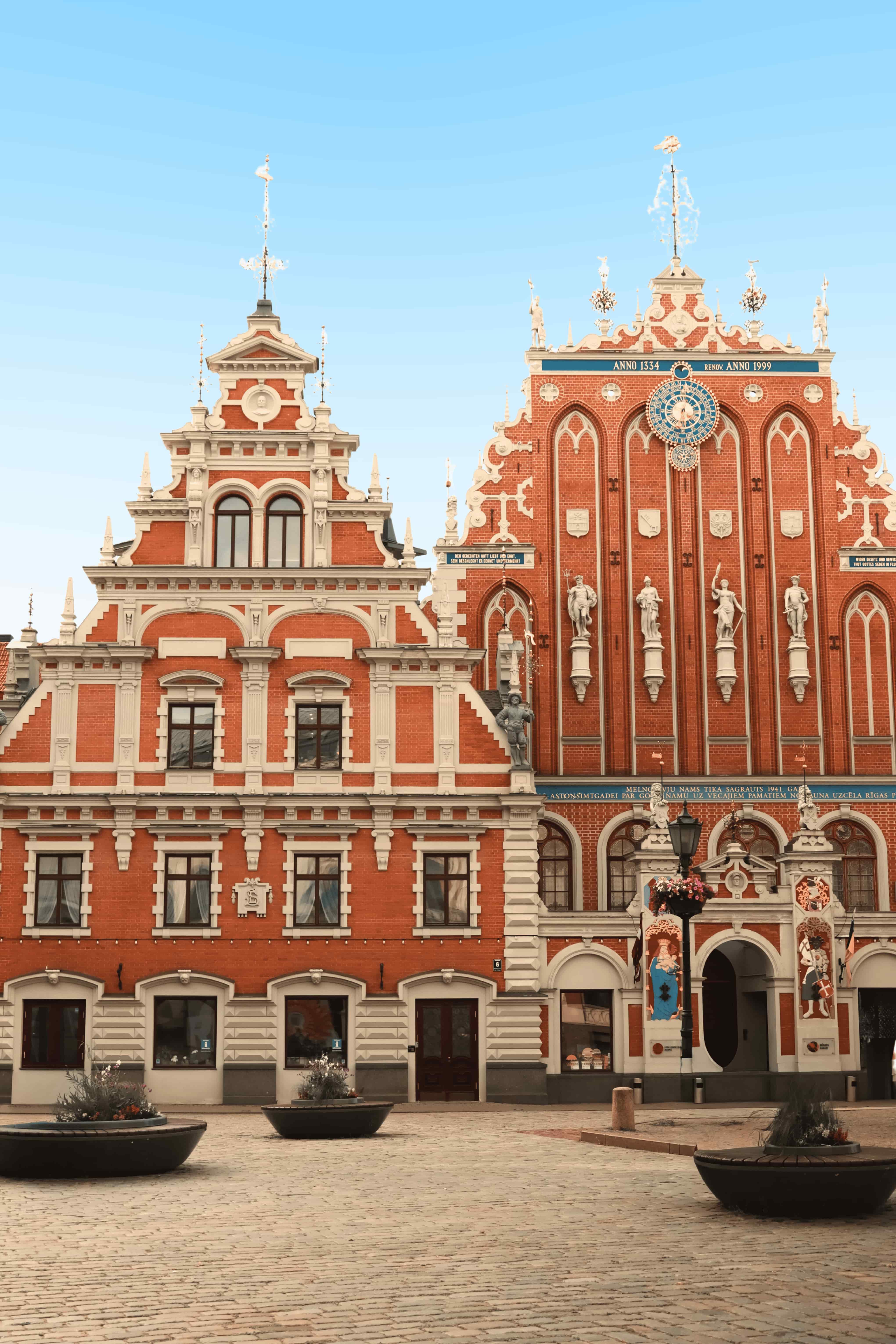
On Town Hall Square, where Riga's life has shaped itself for centuries, stands one of the city's most recognizable symbols: the House of the Blackheads. Today, its ornate façade draws the attention of passersby, but originally, it was a modest building closely linked to the history of Riga's merchants and trade.
The house appeared here in 1388 as a meeting place for the Brotherhood of the Blackheads – an association of young, unmarried German merchants. They did not yet have full rights to join the Great Guild, so they formed their own brotherhood. This was not only a trading union but also a community with clear rules, religious life, and mutual support. The brothers prayed together, taught newcomers, helped those in need, and cared for widows and orphans associated with the guild.
The brotherhood's patron was Saint Mauritius, a warrior and protector of the merchant guilds, depicted in iconography as dark-skinned. It was this image that gave the brotherhood its name – the Blackheads.
Over time, the House of the Blackheads was rebuilt, and by the 16th century, it had acquired its recognizable appearance – a blend of late Gothic and Renaissance styles. For the members of the association, the opulent appearance of their meeting center was very important. It was a visual display of their wealth and influence on Riga's commercial life.
The building was repeatedly destroyed by wars: a fire in the 17th century, World War II, and the Soviet period of neglect. Only in the late 1990s was the House restored and once again became part of its historical heritage.
It was at the House of the Blackheads, on Town Hall Square, according to legend, that the first Christmas tree was erected in 1510. Thus, this place became not only a commercial but also a festive symbol of Riga – a space where the city's history continues to live on today.
Riga Dome Cathedral
Address: Doma Laukums 1, Rīga
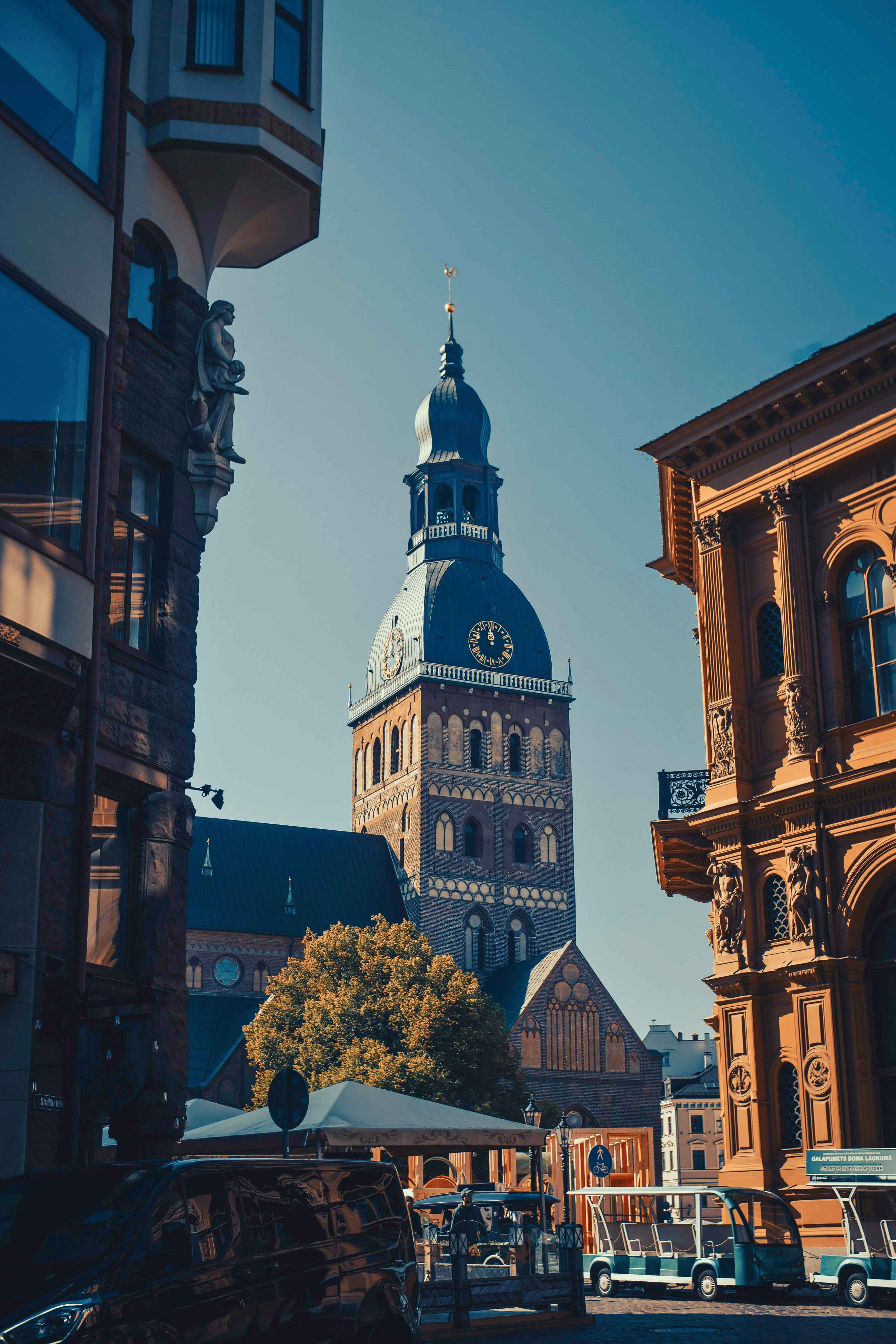
In the very center of Old Riga stands Riga Dome Cathedral, the city's largest church and one of its oldest structures. Its massive red brick walls shape the appearance of Dome Square and recall the time when Riga was just beginning to emerge as an important religious and commercial center.
The cathedral's foundation stone was laid on July 25, 1211, at the initiative of Bishop Albert. After a fire in 1215, construction continued using brick, which over time became the characteristic material of Riga architecture. The cathedral was originally planned as a Romanesque basilica, but the design changed during construction. As a result, the building initially acquired features of a hall church, and later, basilica elements returned.
In the late 14th and early 15th centuries, Riga Dome Cathedral was significantly expanded: side chapels and western naves were added, and the central space was raised. Thus a complex architectural appearance emerged, encompassing several eras.
In the Middle Ages, Riga's Dome Cathedral was the main religious center of Riga, a place where the city's spiritual, political, and social life intersected. After the Reformation in the 16th century, it became a Lutheran church, reflecting the profound changes in Riga's fate.
Today, Riga's Dome Cathedral is not only an architectural monument but also a living witness to more than eight centuries of the city's history.
Three Brothers
Address: Mazā Pils Street 19, Centra Rajons, Rīga
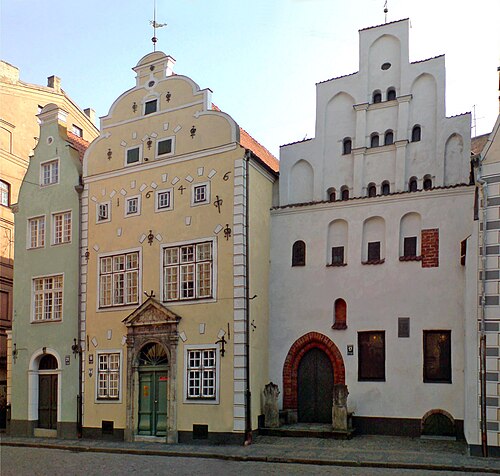
In Riga's Old Town stands a unique complex – the Three Brothers. These three ancient houses are located close to each other and have retained their almost original appearance, having survived wars, Soviet communal apartments, and Perestroika. Their unusual proximity gave rise to a beautiful legend: supposedly, the houses were built by a merchant family, and each brother reflected their character in the architecture. A little later, the houses themselves became known as brothers. Thus, the name of the complex – "Three Brothers" – became symbolic and firmly entered the history of the city.
But in reality, each house reflects its era, and they were certainly not built by brothers.
The 15th-century "Elder Brother" (No. 17) is austere and Gothic: narrow windows, a restrained façade, and stone portals. The "Middle Brother" (No. 19), dating from the mid-17th century, is ornate, with Renaissance elements and clear symmetry. The "Younger Brother" (No. 21), dating from the late 17th century, is simple and practical, without frills, yet functional and convenient for city life.
The complex also reveals the social structure of Riga: wealthy artisans lived in the main halls (they owned the houses), while apprentices lived in the rear rooms. The houses have survived as a rare example of urban architecture, where every detail tells the story of the era.
Today, the "Three Brothers" are architectural monuments and a popular tourist attraction. They are home to the Museum of Latvian Architecture and the State Inspectorate for the Protection of Cultural Monuments. Their close proximity and historical significance make the complex a must-see. The façades reveal a living chronicle of Riga, etched in stone and time.
Cat House
Address: Meistaru Street 10/12, Central District, Riga
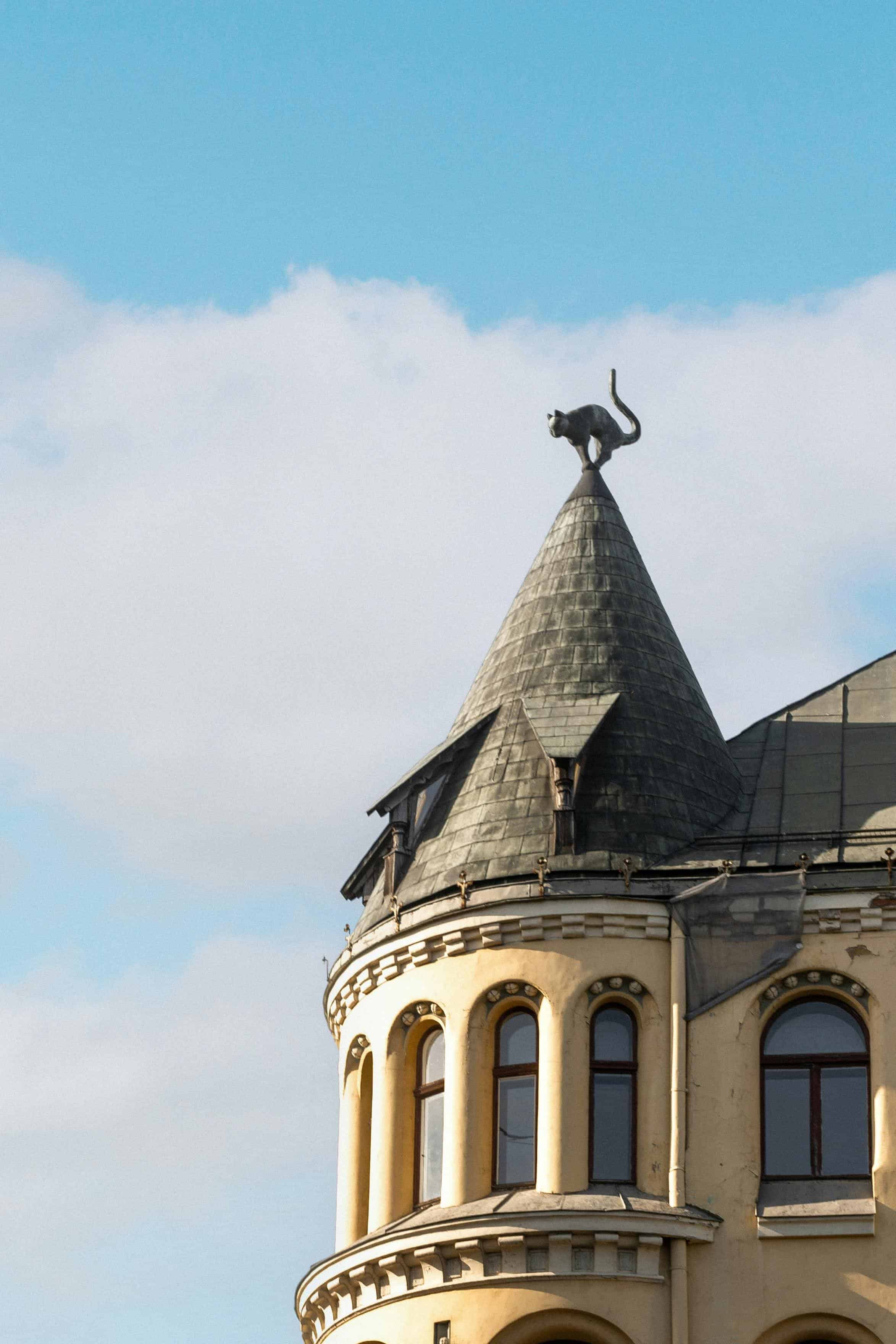
Cat House, built in 1909 in the Art Nouveau style, is one of Riga's most recognizable architectural landmarks. Two bronze cats stand atop its turrets, becoming a symbol of the city and a popular tourist attraction.
According to popular legend, the building belonged to the merchant Johann Blumer, who dreamed of joining the Great Guild, an association of influential Riga merchants of German descent. He was rejected, and, as tour guides recount, the offended Blumer decided to take revenge. He commissioned two bronze cats and pointed their tails toward the Guild building, which stands across from the Cat House. Outraged, the elders initiated legal proceedings, and the merchant's defense was recorded in the documents: "Cats are free animals. They can stand wherever and however they want."
Historians, however, consider this version to be a fabrication: there were no lawsuits related to Blumer's house, and the legend appeared much later and gained popularity through tours.
However, there are also confirmed facts about the Cat House. The building's architecture reflects the Art Nouveau style of the early 20th century: a luxurious arch with characteristic Art Nouveau elements, decorative stucco, and carved elements on the façade emphasize the individuality of the style and the character of the owner.
Today, the Cat House is not only an architectural landmark but also a symbol of the Riga spirit: a little stubborn, humorous, and imaginative. The bronze cats are a reminder of how history and legend intertwine in the urban environment, making a stroll through Riga truly special.
Freedom Monument
Address: Brīvības laukums, Centra rajons, Rīga
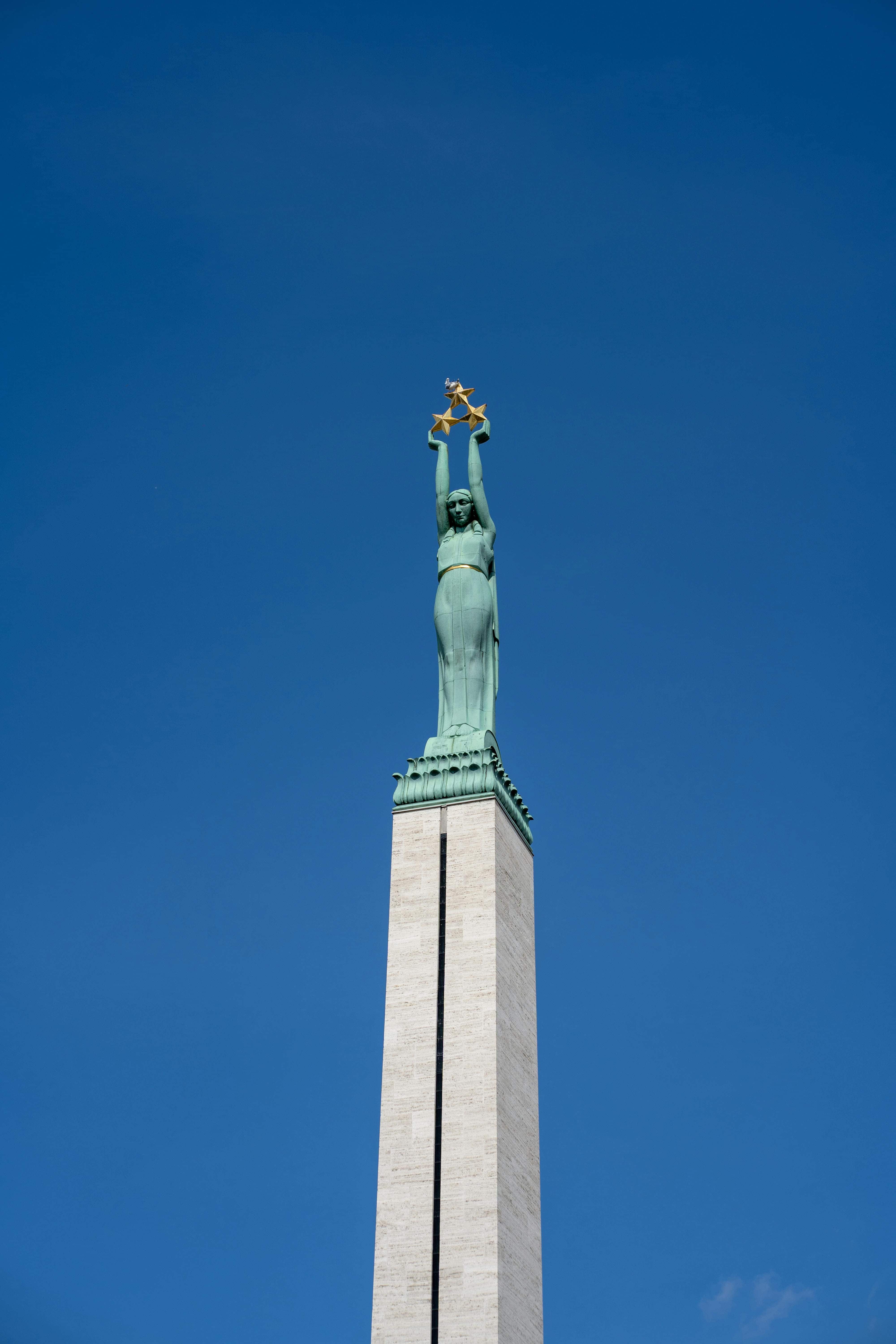
The Freedom Monument is one of the main symbols of Riga and all of Latvia. It is dedicated to the country's struggle for independence and to the soldiers who died liberating Latvia. The idea for its construction arose in 1922, when Prime Minister Zigfrieds Anna Meierovics proposed erecting a monument in honor of the freedom fighters. A design competition was announced in 1923, which consisted of several stages and concluded in December 1930 with the victory of sculptor Kārlis Zāle with his design "Shine Like a Star."
The Freedom Monument was built with public donations. Special tokens of various denominations were distributed throughout Latvia – from 20 and 50 santīms to 1, 5, 10, 20, and 100 lats (lats and santims were the currency of Latvia during its independence from 1922 until its accession to the USSR, and then, after the collapse of the Soviet Union, from 1993 to 2014). The 20 and 50 santīm tokens were designed specifically for schoolchildren and children, so that even they could donate their pocket money and feel personally involved in the monument's creation. In total, approximately three million lats were raised, making the monument truly national in scope.
The ceremonial opening took place on November 18, 1935. From that day on, a military honor guard stood at the monument – a tradition interrupted during the Soviet occupation and restored in 1992 in the same form. After World War II, the monument endured difficult times: the possibility of its demolition was discussed, the official interpretation of its symbolism changed, and public gatherings and flower-laying were banned. Despite this, the Freedom Monument continued to exist and survived the occupation.
Every element of the monument is imbued with symbolism. The three stars held by the "Mother of Latvia" symbolize the country's historical regions: Kurzeme, Vidzeme, and Latgale. Sculptural groups and bas-reliefs depict key stages in the struggle for freedom. Today, the Freedom Monument remains the focal point of state events and one of the main symbols of independent Latvia.
Riga Central Market
Address: Nēģu iela 7, Latgales priekšpilsēta, Rīga
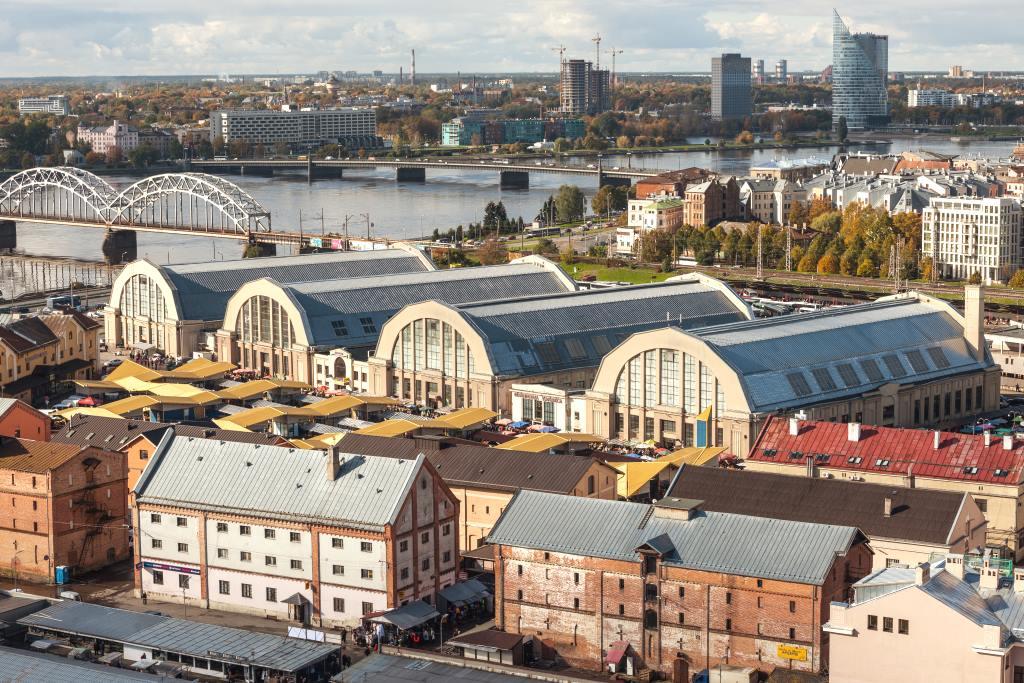
Riga Central Market is a unique architectural landmark and a gastronomic symbol of Latvia's capital. Its famous pavilions were built between 1924 and 1930 on the premises of captured German Zeppelin hangars left over from World War I. These enormous metal structures, once intended for military airships, have been given a new lease on life, becoming the foundation of one of Europe's largest markets.
Architect Pauls Dreimanis brilliantly adapted the hangars into retail pavilions. The upper sections of the hangars were reused, while the lower sections were rebuilt from stone and reinforced concrete, creating spacious and durable structures. By 1930, the market had become a modern and technologically advanced facility, attracting residents and visitors alike with its grandeur and unusual architecture.
Today, the Central Market is more than just a place to shop, but also a monument to engineering excellence and architectural boldness. Vibrant urban life continues beneath the vaults of the former military hangars, and pavilions create a unique atmosphere.
The site has been recognized as a UNESCO World Heritage Site, underscoring its historical and international significance. The Riga Central Market remains a symbol of the city, where past meets present, and architecture and history are harmoniously intertwined. All this creates an impressive tourist attraction and a retail space for local artisans and farmers.
St. Peter's Church
Address: Reformācijas laukums 1, Centra rajons, Rīga
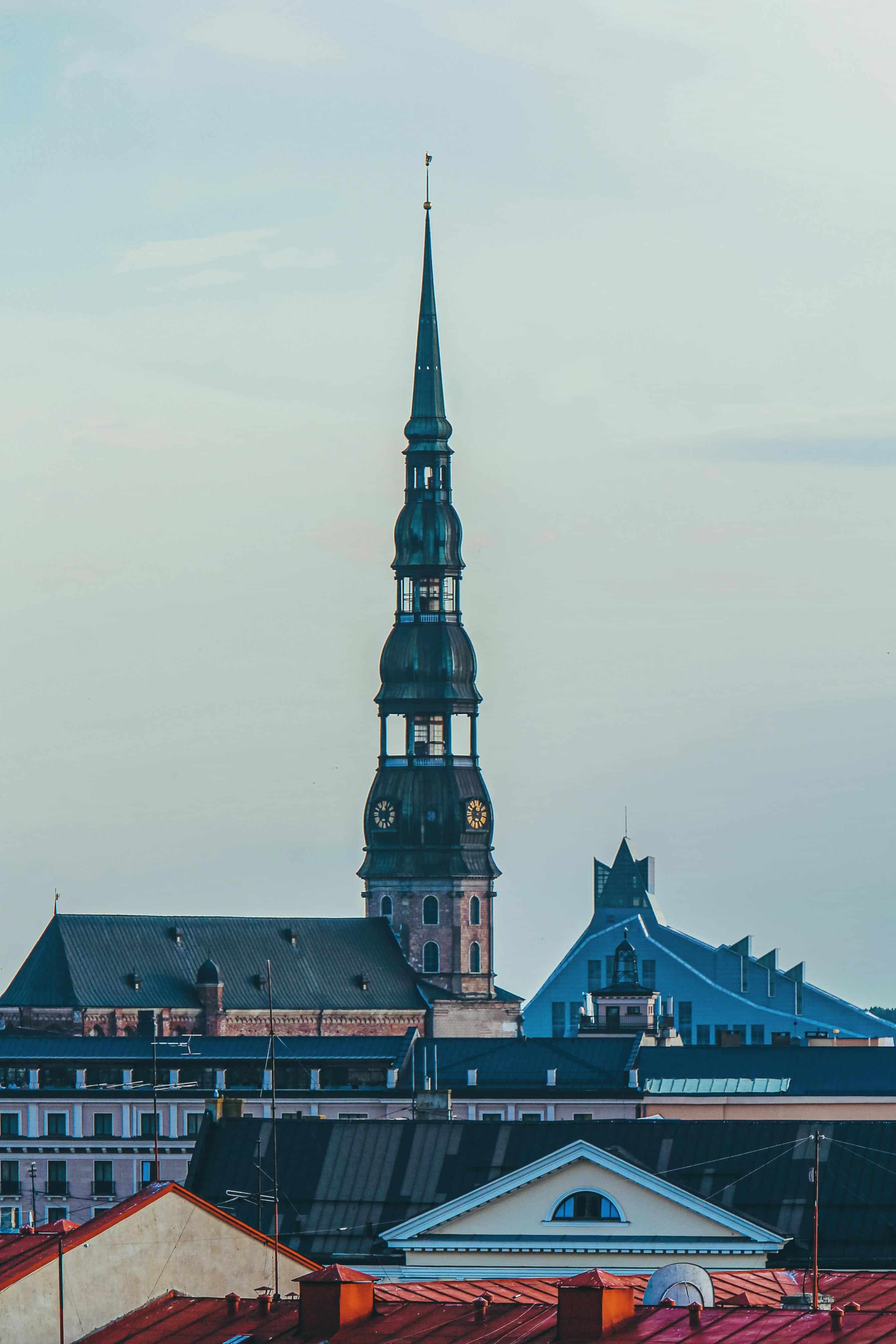
St. Peter's Church is one of the oldest and tallest churches in Riga. It was first mentioned in documents in 1209, although the exact date of construction is unknown. It is named after Saint Peter, the city's patron saint. Funds for its construction were raised by local residents – merchants, artisans, and burghers – and the church itself became not only a religious center but also a place for public gatherings.
Over the course of eight centuries, the church belonged to various Christian denominations: until 1524 to the Catholics, from 1526 to 1940 to the German Lutheran community, and after the restoration of independence in 1991 to the Evangelical Lutheran Church of Latvia.
The bell tower and its spire are particularly renowned. In the 15th century, the tower reached 136 meters (~446.1 feet) in height; today, it stands 123.25 meters (~403.5 feet), of which the spire is 64.5 meters (~209.9 feet). A weather vane once stood on the tower, indicating the wind direction for merchants. The current golden rooster, installed in 1970, retains this function and further symbolizes vigilance, protection from evil spirits, and the city's spiritual awakening.
Throughout its history, the tower has burned and been restored numerous times, particularly after the shelling of World War II. Today, St. Peter's Church is a historical monument, an observation deck, and a symbol of medieval Riga, preserving its architectural uniqueness and significance for the city.
Riga Art Nouveau
Address: Alberta Street, Centra District, Riga
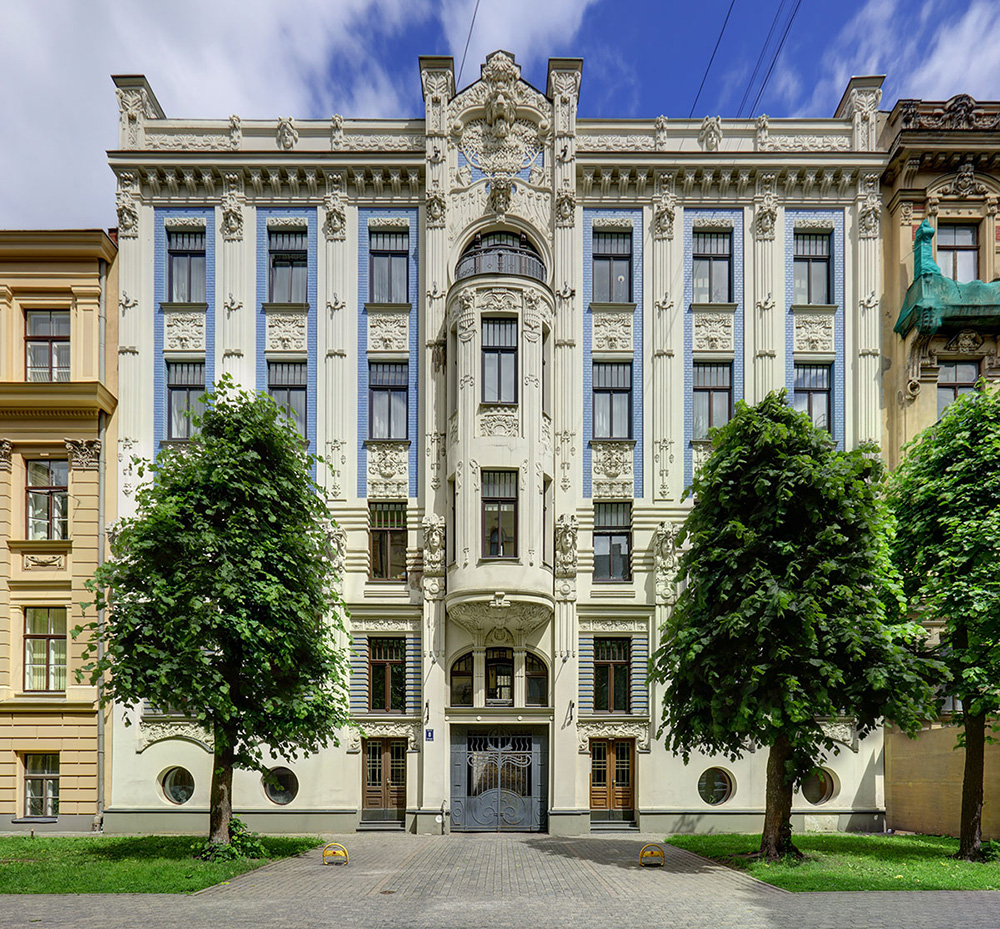
Everyone talks about Riga's great Art Nouveau legacy, but what does this term actually mean?
This style has many different names, originating from different European countries. Art Nouveau, Modernism, or Jugendstil – all have the same meaning: "new art." This style represented a shift in philosophy and approaches to decorative arts and architecture at the beginning of the 20th century. It reflected a desire for harmony, asymmetry, natural motifs, and new forms in urban space.
Art Nouveau arrived in Riga at the beginning of the 20th century, when the city was experiencing unprecedented economic, demographic, and cultural growth. The historic port city was at the peak of its popularity, and the ban on stone buildings outside the Old Town was lifted. At the same time, Europe was actively developing a new architectural movement – Art Nouveau.
From 1905 to 1914, between 300 and 500 Art Nouveau buildings were built in Riga annually. Today, more than a third of these buildings remain in the city's historic center, and they are in excellent condition, making Riga the world capital of Art Nouveau. The main landmarks are Alberta Street and the Elizabetes Street area. Locals call this area the Quiet Center.
Outstanding Riga architects – Mikhail Eisenstein, Konstantīns Pēkšēns, and Eižens Laube – created striking examples. Their buildings amaze with floral and animal motifs, asymmetrical forms, unexpected ornaments, and bright façades, reflecting the tastes and cultural aspirations of Riga's residents on the eve of World War I.
If you'd like not just to see the façades, but to learn how to read and understand their symbols and hidden meanings, our Art Nouveau route in Riga will help you see the city in a completely new way.
Riga is a city where history and architecture intertwine at every step. Medieval houses, legendary monuments, distinctive façades, and vibrant Art Nouveau create a truly unique urban landscape. Each building preserves the memory of its time, its people, and its stories, forming a rich and living cultural fabric.
If after reading this article you feel inspired not just to explore the city, but to truly understand what you're seeing, check out our Art Nouveau tour – an experience where you'll learn to speak the language of the city and uncover the hidden symbolism of Riga's buildings.